 All questions /02 / Care & Wellbeing
Care & Wellbeing
From skin folds to breathing: practical care and when to call your vet.

Can my Frenchie swim?
Do not assume your Frenchie can swim safely. Short-nosed dogs can find swimming especially hard work; shallow, supervised paddling is a more cautious starting point.
Read the answer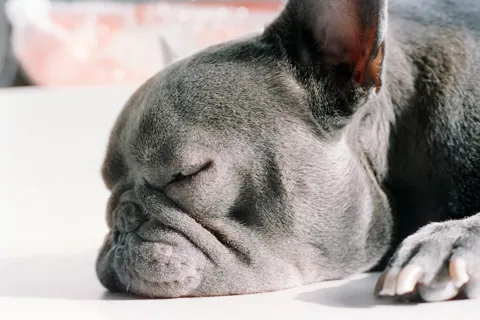
Why does my Frenchie snore?
Snoring can indicate restricted airflow. In a French bulldog, it deserves veterinary attention rather than being dismissed as a breed quirk.
Read the answer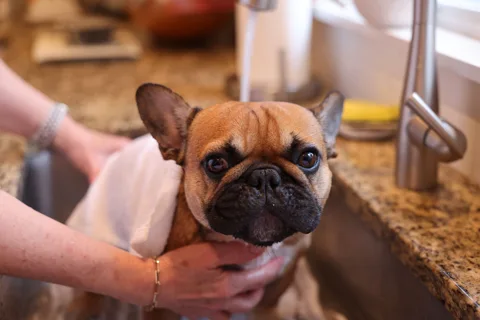
How often should I wash my Frenchie?
There is no fixed bath schedule for every Frenchie. Wash when needed, and follow your vet’s schedule if they are treating a skin condition.
Read the answer
How do I clean my Frenchie’s wrinkles?
Check the folds regularly, clean them gently using the method your vet advises, and dry them thoroughly afterwards.
Read the answerHow often should I brush my Frenchie’s teeth?
Aim for daily brushing with a suitable dog toothbrush and pet toothpaste. Start gradually rather than holding their mouth open. If the gums are already sore or inflamed, speak to your vet before brushing; pain needs attention, not a firmer cleaning routine.
Read the answerCan I use human toothpaste for my Frenchie?
No. Use toothpaste made for dogs; human toothpaste is unsuitable. A small dog toothbrush or an appropriate soft child-sized brush can help you reach the teeth. Ask your veterinary nurse to show you a comfortable technique for your Frenchie’s mouth.
Read the answerDo dental chews replace brushing?
No. Chews can support dental care, but brushing remains the most effective home approach. Choose an appropriate size, supervise chewing and include the calories in the day’s food allowance. Ask your vet which options suit your dog’s teeth and diet.
Read the answerCan I scrape tartar off my Frenchie’s teeth?
Do not try to scrape hardened tartar away yourself. You can damage the tooth surface and miss disease below the gumline. Your vet can assess what treatment is needed; removing visible staining alone is not the same as treating dental disease.
Read the answerWhy does my Frenchie have bad breath?
Persistent bad breath can accompany dental disease, although other causes are possible. Book a vet check rather than covering the smell with treats. Mention changes in eating, drooling, gum colour or willingness to have the face touched.
Read the answerHow do I introduce toothbrushing to a nervous Frenchie?
Work through small, rewarded steps: comfortable mouth handling, seeing the brush, then briefly touching a few teeth. Keep sessions short and stop before your dog becomes worried. Go back a step next time if needed. Never force access to the mouth.
Read the answerHow often should a vet check my Frenchie’s teeth?
Include a mouth examination in routine veterinary visits, with more frequent checks if your vet recommends them. Home brushing does not replace professional assessment. Contact the practice sooner for bad breath, bleeding, facial swelling or trouble eating.
Read the answerDoes a broken tooth need a vet even if my Frenchie is eating?
Yes. A fractured tooth can be painful or become infected, and dogs may continue eating despite dental pain. Arrange a veterinary examination. Do not test the tooth or try to pull it; significant bleeding, swelling or inability to eat needs urgent advice.
Read the answerDoes dry food clean my Frenchie’s teeth?
Dry food may have a mild cleaning effect, but it is not a substitute for brushing and dental checks. Choose food for your dog’s overall nutritional needs. If you want a dental diet, ask your vet whether a particular product is appropriate.
Read the answerHow do I check my Frenchie’s mouth without upsetting them?
Introduce lip lifting slowly and reward cooperation. Look only while your dog is comfortable; stop if they resist or seem sore. PDSA suggests checking during daily brushing. Ask your vet to demonstrate if handling the mouth feels difficult or unsafe.
Read the answerWhy do my Frenchie’s ears smell?
An unpleasant ear smell, especially with wax, redness or scratching, warrants a vet appointment. Infection is one possibility, but underlying skin problems or mites may contribute. Cleaning alone may not address the cause. Avoid starting leftover drops without veterinary advice.
Read the answerWhy is my Frenchie shaking their head repeatedly?
Repeated head shaking can accompany ear discomfort or infection. Arrange a vet check, particularly if the ear is red, smelly or painful. A head tilt or loss of balance needs prompt veterinary attention because deeper ear structures may be involved.
Read the answerCan I clean my Frenchie’s ears with cotton buds?
No. PDSA advises against cotton buds for dog ears. Ask your vet or nurse to show you safe cleaning with an appropriate product. If the ear is painful, red or unusually waxy, have it examined rather than attempting a deep clean.
Read the answerHow often should I clean my Frenchie’s ears?
There is no single routine for every dog. Ask your vet whether your Frenchie needs cleaning and how often; excessive cleaning can contribute to ear problems. A dog with recurring infections needs assessment of the underlying cause, not simply more frequent cleaning.
Read the answerDoes dark earwax mean my Frenchie has ear mites?
Dark wax and itch can occur with ear mites, but appearance alone cannot confirm the cause. Contact your vet to examine the ear and choose treatment. Do not assume every dirty ear has mites or use a home remedy in place of examination.
Read the answerCan ear mites spread to other pets?
Yes. Ear mites can pass between animals, and other dogs or cats in the household may need treatment. Ask your vet for a coordinated plan. Products must be appropriate for each animal; do not share a dog’s medicine with another pet.
Read the answerIs a swollen ear flap something to check with the vet?
Yes. Ear-flap swelling can accompany an ear problem and should be examined. Mention scratching, head shaking, smell and any sensitivity to touch. Do not squeeze or try to drain the swelling at home; your vet needs to establish what is causing it.
Read the answerWhy is my Frenchie holding one eye shut?
Holding an eye shut or squinting can indicate eye pain, including an ulcer. Contact your vet urgently rather than waiting to see if it clears. Tell them about any recent scratch, discharge, cloudiness or rubbing so they can triage the problem.
Read the answerAre red eyes normal for a Frenchie?
No. Redness is a symptom with several possible causes, including irritation, ulcers and pressure changes. Book a veterinary appointment promptly; ask for urgent assessment if the eye appears painful. Do not assume redness is harmless or automatically an infection.
Read the answerWhat should I do if my Frenchie’s eye looks cloudy?
Contact your vet promptly. Cloudiness is an eye change that needs examination, especially with squinting, redness or rubbing. An online description cannot distinguish the possible causes, and delaying care can threaten sight. Do not use leftover eye medication.
Read the answerCan a Frenchie have dry eye even when there is discharge?
Yes. Dry eye can produce sticky discharge and discomfort rather than simply looking dry. Your vet can test tear production and decide on treatment. A red, sore or repeatedly mucky eye needs an examination; wiping discharge does not treat the underlying problem.
Read the answerShould I wait a few days if my Frenchie’s eye is sore?
No. Eye problems can worsen quickly and affect vision. Call your vet when you notice soreness, changed appearance or unusual discharge; request urgent help for pain. Describe the signs rather than guessing a diagnosis so the practice can advise on timing.
Read the answerWhen is eye discharge a reason to call the vet?
Contact your vet if discharge is new, unusual or accompanied by a change in the eye’s appearance. Some dogs have a small normal amount, but redness, pain, swelling or holding the eye shut should not be dismissed as routine tear staining.
Read the answerWhy does my Frenchie keep rubbing their eye?
Rubbing can indicate irritation or pain, including an ulcer or something caught near the eye. Contact your vet promptly. Avoid letting them continue to injure the area and ask the practice how best to prevent rubbing while you arrange assessment.
Read the answerCan I use human nail clippers on my Frenchie?
Use dog nail clippers rather than human clippers or scissors. Unsuitable tools can squash or split the claw. Work only while your dog is relaxed and you can see what you are doing; ask your vet or nurse for a demonstration first.
Read the answerHow do I trim my Frenchie’s black nails safely?
Dark nails make the sensitive quick difficult to see. Ask your vet or nurse to show you where to trim rather than guessing. Introduce handling gradually and stop if your dog becomes worried. Professional help is sensible if you cannot identify a safe cutting point.
Read the answerHow can I tell if my Frenchie’s nails are too long?
Claws that touch the ground excessively, click while walking or cause discomfort may need attention. Check them with your vet or groomer rather than relying on sound alone. If your dog is licking sore claws or walking differently, arrange a veterinary check before trimming.
Read the answerDo I need to check my Frenchie’s dew claws?
Yes. These claws sit higher on the inside of the leg and are easy to miss during nail checks. They can grow round towards the pad. Ask a professional to assess overgrown or painful claws rather than trying to cut a tightly curled nail yourself.
Read the answerWhat if my Frenchie’s nail bleeds after trimming?
Stay calm, apply gentle pressure with a clean dressing and contact your vet for advice. A cut quick can be painful. Seek help if bleeding continues or the claw is damaged; do not keep trimming while your dog is distressed or sore.
Read the answerCan my Frenchie get fleas in winter?
Yes. Fleas occur throughout the year, especially in heated homes. Keep to the parasite-prevention plan recommended for your dog rather than stopping solely because it is cold. Ask your practice if you notice itching or suspect a treatment has not worked.
Read the answerDo I need to treat the house if my Frenchie has fleas?
Usually yes: an infestation involves the environment as well as the animal. Ask your vet about treating all household pets and the home safely. Read household-product warnings carefully, especially around cats, fish and birds, and never apply household spray directly to an animal.
Read the answerCan I share my Frenchie’s flea treatment with the cat?
Do not share parasite products between species unless a vet specifically confirms the product is suitable. The correct choice depends on the animal and its details. Tell your vet about every pet at home so they can plan treatment safely across the household.
Read the answerWill flea shampoo solve an infestation?
Flea shampoo alone is often ineffective. A successful plan may need suitable treatment for each pet, environmental control and ongoing prevention. Ask your vet which product is appropriate and follow its instructions; do not combine several treatments in an attempt to speed things up.
Read the answerWhere should I check my Frenchie for ticks?
Check after walks, particularly through long grass or woodland. Look around the head, ears, armpits, groin and tummy. Ticks can resemble a small lump before you notice their legs. If you are unsure what you have found, ask your veterinary practice before pulling at it.
Read the answerShould I remove a tick if my Frenchie already has tick treatment?
Yes, visible ticks should still be removed promptly and correctly. Preventive products reduce risk but do not replace checking. Ask your vet or nurse to demonstrate removal if you are unfamiliar with it; seek advice if you suspect part remains or the skin becomes inflamed.
Read the answerDoes my Frenchie need a vet after a tick bite?
If the tick was fully removed and your dog remains well, a visit is not always necessary. Contact your vet for redness, swelling, suspected retained parts or any illness afterwards. Mention the tick and where you have walked when describing the new symptoms.
Read the answerHow often should I worm my Frenchie?
Follow an individual parasite plan based on the product and your dog’s risk. There is no one schedule that fits every treatment. Ask your vet what the product covers and when to repeat it; record the dates rather than relying on memory.
Read the answerCan my Frenchie catch lungworm from slugs or snails?
Infected slugs and snails can carry lungworm, which can cause serious illness. Discuss appropriate prevention with your vet, particularly if your dog scavenges outdoors. Do not assume a general worming product covers lungworm; check exactly what your chosen treatment protects against.
Read the answerDoes my adult Frenchie still need vaccine boosters?
Yes. Protection needs maintaining throughout life, although not every vaccine component is given at every appointment. Your vet should use your dog’s history and risk to set the schedule. Keep the vaccination record.
Read the answerWhat if my Frenchie has missed a vaccine booster?
Contact your vet with the vaccination record. They can decide what catch-up protection is needed and how to manage contact with other dogs meanwhile. Do not assume an overdue dog remains protected or restart a course without discussing the dates and products used.
Read the answerCan my Frenchie puppy walk outside before finishing vaccinations?
Avoid putting an incompletely vaccinated puppy on the ground in public areas. Ask your vet when protection is sufficient for walks and how to socialise safely meanwhile. Carrying them for carefully managed experiences can avoid exposure while helping them learn about their surroundings.
Read the answerDoes my Frenchie need a kennel cough vaccine for daycare?
It may be recommended when a dog mixes regularly with others, and daycare providers commonly require it. Check the provider’s policy early, then ask your vet about suitability and timing. It is a separate consideration from keeping core vaccinations up to date.
Read the answerAt what age should my Frenchie be neutered?
Discuss timing with your vet rather than choosing a fixed age from a breed forum. Health, body condition, behaviour and, for females, season history can affect the decision. If behaviour is the main concern, ask whether qualified behavioural advice should come first.
Read the answerCan my Frenchie lick their neutering wound?
No: licking and nibbling can interfere with healing. Use the protection your vet recommends and follow the discharge instructions. If a cone is difficult for your dog, ask the practice about suitable alternatives rather than leaving the wound unprotected.
Read the answerWhen can my Frenchie exercise normally after neutering?
Follow the surgeon’s recovery plan even when your dog seems energetic. Activity may need restricting while the wound and internal tissues heal. Ask at the follow-up when to increase walks and play; do not use enthusiasm as proof that healing is complete.
Read the answerCan I give my Frenchie ibuprofen for pain?
No. Human painkillers can be highly toxic to dogs. Only use medication prescribed or specifically directed by your vet for your dog. If they have swallowed a human painkiller, contact a vet immediately with the packet, amount and time of ingestion.
Read the answerWhat if my Frenchie is sick while taking anti-inflammatory medicine?
If vomiting or diarrhoea develops while your dog takes an NSAID, stop the medication and contact the prescribing vet for advice. Mention appetite changes, unusual thirst or blood in stools too. Do not add another painkiller or restart treatment without instructions.
Read the answerDoes my Frenchie need a coat in cold weather?
Some short-coated dogs benefit from a well-fitting coat when they feel the cold. Choose one that allows normal movement and toileting, and adjust outings to the individual. Shivering, confusion, weakness or collapse after cold exposure requires urgent veterinary advice, not just extra clothing.
Read the answerShould I wipe my Frenchie’s paws after winter walks?
Yes. Wipe the feet, legs and belly after wet or gritted walks and dry them. Road grit and prolonged dampness can irritate skin. Check for soreness or trapped debris while handling gently, and ask your vet about persistent irritation or limping.
Read the answerCan my Frenchie walk on a frozen pond?
No. Ice may not support their weight and hidden water can be dangerous. Keep your dog away using a lead. If they fall through, do not enter after them; contact emergency services and encourage them towards safety only if you can do so without risk.
Read the answer